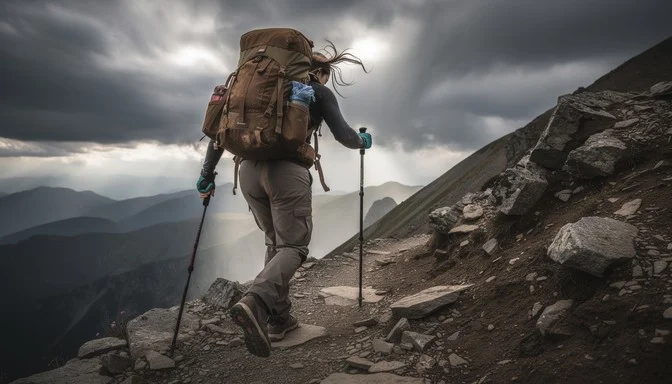
Trekking poles are one of those pieces of gear that feel unnecessary until you actually use them — and then you wonder how you managed without them. On a long descent with a loaded pack, across a slippery stream crossing, or grinding up a steep ridge at the end of a long day, a good pair of poles makes a tangible difference to both comfort and stability.
The market runs from $30 bargain options to $200+ ultralight carbon designs. Here is what is actually worth buying.
Quick Answer
- Best overall: Black Diamond Trail Ergo Cork — comfortable, reliable, adjustable, great for long days (~$130)
- Best budget pick: Foxelli Carbon Fiber Trekking Poles — lightweight, affordable, solid build for the price (~$55)
- Best ultralight: Black Diamond Distance Carbon Z — folding design, 240g per pair, fast to deploy (~$185)
- Best for heavy loads: Black Diamond Alpine Carbon Cork — carbon construction keeps weight down under a heavy pack, lever lock system is bombproof, cork grip is excellent for long days. (~$230)
Our Picks
1. Black Diamond Trail Ergo Cork — Best Overall
Price: ~$130 | Weight: 508g per pair | Material: Aluminum | Adjustment: Flick lock, 62–140cm
The Trail Ergo Cork is the pole most people should buy. The ergonomic cork grip reduces hand fatigue on long days, the FlickLock adjustment is fast and secure, and the build quality holds up to years of regular use. Cork grips have a natural advantage over foam and rubber in warm conditions — they absorb sweat rather than getting slippery, which matters on a long summer day.
The extended grip below the main handle lets you choke up on steep descents without stopping to readjust length — a small feature that becomes genuinely useful on technical terrain.
Pros:
- Cork grip is comfortable over long mileage in warm conditions
- Extended grip allows quick length adjustment on the move
- FlickLock collars are fast to adjust and stay put under load
- Durable aluminum build holds up to hard use
- Wide adjustment range suits most heights
Cons:
- Heavier than carbon alternatives at 508g per pair
- Cork can feel cold and stiff in very cold conditions
- Not the most packable option for travel
2. Foxelli Carbon Fiber Trekking Poles — Best Budget Pick
Price: ~$55 | Weight: 440g per pair | Material: Carbon fiber | Adjustment: Twist lock, 61–132cm
Carbon fiber poles at $55 sounds too good to be true. In Foxelli’s case it is mostly legitimate — these are a genuine entry point into lightweight poles without the price tag of Black Diamond or Leki. They are not as bombproof as more expensive options and the twist-lock mechanism is less confidence-inspiring than a FlickLock under heavy lateral stress, but for moderate trails and occasional use they perform well above their price point.
Pros:
- Carbon fiber construction keeps weight low at a budget price
- Lightweight enough to notice the difference on long days
- Good value for occasional hikers or those new to poles
- Comfortable foam grip handles most conditions adequately
Cons:
- Twist-lock mechanism is less secure than lever-lock systems under stress
- Less durable than premium poles over extended hard use
- Tips and baskets wear faster than higher-end options
3. Black Diamond Distance Carbon Z — Best Ultralight
Price: ~$185 | Weight: 240g per pair | Material: Carbon fiber | Adjustment: Fixed length (multiple sizes)
240 grams per pair. That is extraordinarily light — about the weight of a small apple. The Z-pole folding design collapses into three sections and stashes in seconds, which makes them practical for fast-and-light hiking, trail running, or any trip where poles go in the pack as much as in your hands.
The trade-off for that weight is fixed length — you choose your size when you buy. No adjustment means no fine-tuning for uphill versus downhill, which is a real limitation for mixed terrain over long distances. For flat to moderate terrain and users who know their preferred pole length, they are exceptional.
Pros:
- Lightest poles in this guide at 240g per pair
- Fold-down design packs away quickly and compactly
- Ideal for trail running, fast hiking, and ultralight trips
- Extremely packable — fits alongside a pack or in a side pocket
Cons:
- Fixed length — no adjustment for terrain or different users
- Less suitable for heavily varied terrain where length changes matter
- More expensive than adjustable aluminum alternatives
- Carbon can snap rather than bend under sudden lateral stress
4. Black Diamond Alpine Carbon Cork — Best for Heavy Loads and Rough Terrain
Price: ~$230 | Weight: 436g per pair | Material: Carbon fiber | Adjustment: FlickLock, 95–125cm
The Alpine Carbon Cork is built for exactly what the name suggests — carrying heavy loads over serious terrain. The carbon fiber construction keeps weight low despite the robust build, and the FlickLock Pro mechanism is one of the most reliable adjustment systems available, holding firm under the lateral stress that heavy pack hiking puts on poles. The cork grip is excellent and the shorter adjustment range is optimized for aggressive mountain terrain rather than casual trail use.
If you regularly carry a heavy pack in demanding conditions and want poles that keep up without adding weight, this is the one.
Pros:
- Carbon construction keeps weight low despite bomber build quality
- FlickLock Pro is among the most reliable adjustment mechanisms available
- Excellent cork grip comfortable over long high-output days
- Handles heavy load stress better than aluminum alternatives
- Lighter than comparable aluminum poles at 436g per pair
Cons:
Adjustment range less suited to casual or varied terrain hiking
Shorter adjustment range — check sizing before buying, best for medium to tall users
Carbon can snap rather than bend under sudden extreme lateral force
More expensive than aluminum alternatives
What Actually Matters When Choosing
Material: Aluminum vs. Carbon
Aluminum poles are heavier, cheaper, and bend rather than break under stress. Carbon poles are lighter and stiffer, but can snap suddenly under lateral force — particularly relevant if you use poles aggressively for balance on rough terrain or in stream crossings. For most recreational hikers, aluminum is the more forgiving choice. For weight-conscious backpackers on moderate terrain, carbon is worth considering.
Adjustment Mechanism
Lever lock (FlickLock, Speed Lock) — fast, reliable, visible when locked, holds under load. The better choice for most hikers.
Twist lock — lighter and simpler, but harder to verify as locked and more likely to slip under heavy lateral stress. Fine for casual use, less reassuring in demanding conditions.
Fixed/folding — no adjustment at all. Lightest option, best for users with a known preferred length who prioritise packability.
Grip Material
Cork — best for warm conditions and long days; absorbs sweat, moulds slightly to your hand over time, comfortable in heat.
Foam — light and warm to the touch in cold conditions; absorbs moisture rather than shedding it, which can get uncomfortable on long wet days.
Rubber — durable and warm, but can cause blisters on long days in warm conditions. Better suited to cold-weather use.
Wrist Straps
Good wrist straps let you transfer weight through the strap rather than gripping the pole tightly — which reduces hand fatigue significantly on long descents. Look for padded, adjustable straps that can be loosened and tightened quickly. On technical terrain or stream crossings, release the straps entirely so a fall does not drag the pole with you.
Tips for Getting the Most Out of Trekking Poles
Set the right length. Standing upright holding the pole, your elbow should be at roughly 90 degrees. Shorten slightly for uphill, lengthen for downhill — most experienced hikers adjust automatically.
Use the straps properly. Thread your hand up through the loop from below, then grip the handle with the strap across your palm. This lets the strap take weight rather than your grip.
Plant behind your foot on descents. On steep downhill terrain, planting the pole slightly behind your leading foot gives a braking effect and takes load off your knees — the main reason most people find poles worth carrying.
Swap tips for terrain. Most poles come with carbide tips for dirt and rock. Rubber tip covers are worth adding for use on hard surfaces and wooden boardwalks where metal tips are loud, slip easily, and damage the surface.
Frequently Asked Questions
Do I really need trekking poles?
No — but most people who try them on a long or loaded trip do not go back. The benefit is most noticeable on long descents (significantly reduces knee stress), on rough or loose terrain (improves balance), and during stream crossings (provides a third point of contact). If you have had knee issues or carry a heavy pack regularly, poles are worth trying before dismissing.
One pole or two?
Two. One pole provides some balance benefit but misses the bilateral load-sharing that makes the real difference on long descents and rough terrain. If you only want to carry one, a single adjustable pole is better than nothing — but two is the practical standard for good reason.
How long should my trekking poles be?
A rough starting point: elbow at 90 degrees when standing upright holding the grip. Most people land between 105 and 125cm. Adjustable poles let you dial this in precisely and modify for terrain. If buying fixed-length poles, measure carefully before ordering.
Can trekking poles replace tent stakes?
Some ultralight trekking pole tents are designed to use poles as their primary support structure, which saves significant weight. If you are building a system around this, make sure your poles are the right length for the tent design and that the tips fit the tent’s pole cups. Not all poles are compatible with all trekking pole shelters.
Prices are approximate at time of writing. As an Amazon Associate, we earn from qualifying purchases.