
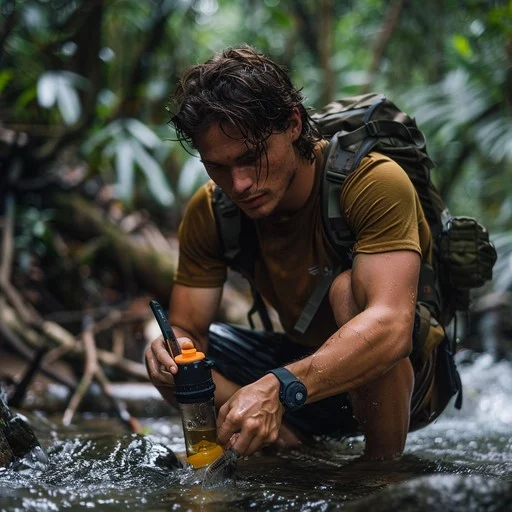
Clean water is not optional in the backcountry. Every natural water source — however clear and cold it looks — can carry pathogens that will put you on the ground within 24 hours. Giardia, cryptosporidium, and bacteria are invisible, odourless, and genuinely unpleasant to deal with hundreds of miles from a bathroom.
The good news is that water treatment has never been lighter, faster, or more affordable. Here is what is worth carrying.
A Quick Note on What You Are Filtering
Most backcountry water sources in North America require protection against three things:
- Bacteria — E. coli, salmonella, and others. Removed by most filters.
- Protozoa — Giardia and cryptosporidium. Removed by most filters.
- Viruses — Norovirus, hepatitis A, and others. Not removed by standard filters. Requires a purifier, UV treatment, or chemical treatment.
In most North American wilderness, virus risk is low. In international travel or areas with high human activity near water sources, virus protection matters more. Know your destination and choose accordingly.
Quick Answer
- Best overall: Sawyer Squeeze — lightweight, fast, reliable, backflushable (~$46)
- Best for solo ultralight travel: Sawyer Micro Squeeze — same performance, smaller and lighter (~$34)
- Best pump filter: MSR MiniWorks EX — reliable in all conditions, field-maintainable (~$90)
- Best UV purifier: SteriPen Adventurer Opti — kills viruses too, fast treatment time (~$120)
- Best for groups: Katadyn Hiker Pro — high output, easy to use, handles silty water well (~$100)
- Best chemical backup: Aquatabs Water Purification Tablets — near-weightless emergency backup, kills viruses (~$35)
Our Picks
1. Sawyer Squeeze — Best Overall
Price: ~$35 | Weight: 85g | Method: Hollow fiber | Virus protection: No
The Sawyer Squeeze is the most popular backcountry water filter for good reason. It is light, fast, inexpensive, and rated to filter one million gallons before the manufacturer recommends replacement. You fill the included soft flask, screw on the filter, and squeeze clean water directly into your mouth or another container. It also attaches inline to a hydration reservoir or screws onto a standard water bottle.
Backflushing — pushing clean water back through the filter with the included syringe — keeps flow rate high over time and extends the filter’s life indefinitely with proper care.
For most North American backcountry trips, it is all you need.
Pros:
- Very affordable for the performance on offer
- Lightweight and compact
- Versatile — works as a squeeze filter, inline filter, or straw
- Backflushable — maintains flow rate with regular maintenance
- Effectively unlimited lifespan with proper care
Cons:
- Does not filter viruses
- Flow rate slows if not backflushed regularly
- Soft flasks included are adequate but not the most durable
- Can freeze — protect in cold weather or it may crack and fail
2. Sawyer Micro Squeeze — Best for Ultralight Travel
Price: ~$30 | Weight: 56g | Method: Hollow fiber | Virus protection: No
Same filtration technology as the Squeeze in a smaller, lighter package. The flow rate is slightly lower, but at 56g it is one of the lightest effective filters available. For ultralight backpackers counting every gram, the Micro is the logical choice. For everyone else, the standard Squeeze’s higher flow rate is worth the extra 30 grams.
Pros:
- Lightest effective filter in this guide
- Same reliable filtration as the standard Squeeze
- Very affordable
- Backflushable
Cons:
- Slower flow rate than the standard Squeeze
- Smaller included flask
- Does not filter viruses
3. MSR MiniWorks EX — Best Pump Filter
Price: ~$130 | Weight: 370g | Method: Ceramic/carbon pump | Virus protection: No
Pump filters have largely been displaced by squeeze filters for solo and lightweight travel, but they still have real advantages in specific situations. The MiniWorks EX works in any conditions including silty, murky, or partially frozen water that would clog a squeeze filter quickly. It can be fully disassembled and cleaned in the field without tools, which matters on long expeditions where filter maintenance is part of the routine.
For group travel, base camps, or trips in challenging water conditions, it earns its extra weight.
Pros:
- Works in turbid, silty, and difficult water conditions
- Fully field-maintainable without tools
- Reliable and repairable over many years of use
- Pumps directly into any container — no awkward squeezing or holding
Cons:
- Heavy at 370g compared to squeeze filters
- Slower than squeeze filters for solo use
- Pumping is physically tiring over large volumes
- More expensive than comparable squeeze options
4. SteriPen Adventurer Opti — Best UV Purifier
Price: ~$120 | Weight: 90g | Method: UV light | Virus protection: Yes
UV purifiers work differently from filters — instead of physically removing contaminants, they use ultraviolet light to destroy the DNA of pathogens, rendering them unable to reproduce. The SteriPen treats a litre of water in about 90 seconds and kills bacteria, protozoa, and viruses.
The important caveat: UV treatment requires clear water to work properly. Turbid or silty water blocks UV light and reduces effectiveness. In murky conditions, pre-filter through a bandana or coffee filter before treating.
For international travel or any destination where virus risk is a genuine concern, a UV purifier paired with a basic squeeze filter for sediment is a highly effective combination.
Pros:
- Kills viruses — most filters do not
- Fast treatment time
- No pumping or squeezing — just stir and wait
- Leaves no chemical taste in the water
- Lightweight and compact
Cons:
- Requires batteries or charging — a dead SteriPen is useless
- Does not work effectively in turbid water without pre-filtering
- More expensive than basic squeeze filters
- Fragile compared to filter options — the UV lamp can break
5. Katadyn Hiker Pro — Best for Groups
Price: ~$100 | Weight: 310g | Method: Pleated glass fiber pump | Virus protection: No
The Hiker Pro pumps faster than the MSR MiniWorks and handles moderately silty water well thanks to its pleated filter design. For small groups of two to four people where one person is filtering for everyone, the higher output and ease of use make it a practical choice. It is not the lightest option, but for the right group trip it pulls its weight.
Pros:
- Higher flow rate than most pump filters — good for group use
- Handles moderately turbid water without immediate clogging
- Easy to use and maintain
- Attaches to standard water bottles and hydration reservoirs
Cons:
- Heavy for solo use
- Filter cartridge replacement adds ongoing cost
- Does not filter viruses
- Pumping mechanism can feel stiff in cold conditions
6. Aquatabs Water Purification Tablets — Best Emergency Backup
Price: ~$35 | Weight: Negligible | Method: Chemical (NaDCC) | Virus protection: Yes
Every pack should have a chemical backup regardless of what primary filter you carry. Filters can freeze, crack, get lost, or clog beyond recovery. Aquatabs weigh almost nothing, cost almost nothing, treat viruses as well as bacteria and protozoa, and take up less space than a chapstick.
The downsides are the 30-minute wait time and a slight chemical taste — both acceptable trade-offs for an emergency option you genuinely hope never to need.
Pros:
- Near-zero weight and cost
- Kills viruses, bacteria, and protozoa
- Works in any water conditions
- Indefinite shelf life if stored dry
Cons:
- 30-minute wait time before water is safe to drink
- Slight chemical taste
- Less effective in very cold or turbid water
- Not a replacement for a primary filter on a real trip — a backup only
Which Method is Right for You?
Solo day hikes and weekend trips in North America — Sawyer Squeeze or Micro Squeeze. Light, fast, affordable, no moving parts to fail.
Multi-day trips in challenging water conditions — MSR MiniWorks EX or Katadyn Hiker Pro. Worth the weight if your water sources are silty or you need to filter large volumes reliably.
International travel or high-traffic water sources — SteriPen paired with a squeeze filter, or chemical tablets as a backup. Virus protection matters more in these environments.
Emergency and backup — Aquatabs in every pack, every trip, no exceptions.
A Few Things Worth Knowing
Always carry a backup. Filters fail, freeze, and get dropped in rivers. A small chemical backup costs $10 and weighs nothing. There is no reason not to carry one.
Cold kills hollow fiber filters. A frozen Sawyer Squeeze can crack internally and fail silently — meaning it looks fine but no longer filters effectively. Keep it in your sleeping bag or an inner pocket overnight in freezing temperatures.
Backflush your Sawyer regularly. Flow rate slowdown is the most common complaint about Sawyer filters, and it is almost always caused by not backflushing often enough. A 30-second backflush every few uses keeps it running like new.
Pre-filter turbid water. Silty or murky water clogs hollow fiber filters fast and reduces UV effectiveness. Running water through a bandana, buff, or coffee filter before treating extends filter life significantly and improves UV treatment reliability.
Frequently Asked Questions
Do I need virus protection in North America?
In most North American backcountry, virus risk from natural water sources is low and a standard filter covering bacteria and protozoa is sufficient. Risk increases near areas of high human activity — popular campgrounds, heavily used trails, areas downstream of agriculture. For international travel, virus protection is worth prioritising.
How long does a Sawyer filter last?
Sawyer rates the Squeeze to one million gallons, which is effectively a lifetime for recreational use. The key is regular backflushing to maintain flow rate and keeping it from freezing. A well-maintained Sawyer Squeeze should last many years of regular backcountry use.
Can I use a water filter in saltwater?
No. Standard backcountry filters and purifiers are designed for freshwater sources and do not remove salt. Desalination requires reverse osmosis equipment. Do not attempt to drink filtered saltwater — the salt remains and will dehydrate you faster.
What is the difference between a filter and a purifier?
A filter physically removes bacteria and protozoa by passing water through a membrane with pores small enough to trap them. A purifier goes further — either through chemical treatment or UV light — to also neutralise viruses, which are too small to be caught by most filter membranes. In practice, most North American backcountry users need a filter. Travellers to regions with higher virus risk benefit from a purifier.
Prices are approximate at time of writing. As an Amazon Associate, we earn from qualifying purchases.