
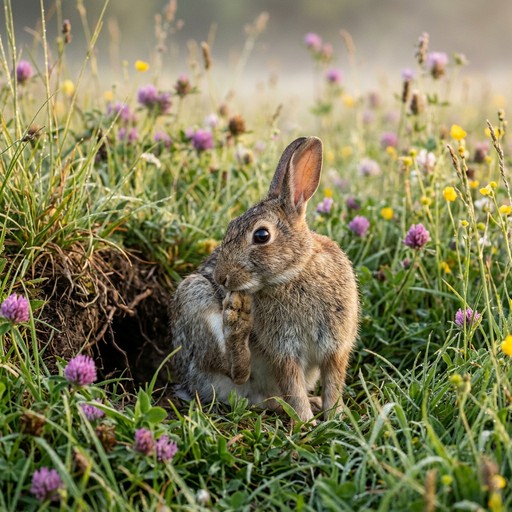
The best wildlife encounters are the ones the animal doesn’t know about. A deer feeding undisturbed at the edge of a meadow, a fox working a field edge at dawn, an owl sitting perfectly still in a tree while you watch from 60 feet away — these moments happen when you get everything right. Movement, wind, noise, timing, patience.
This guide is about developing those skills. Not chasing wildlife, not pushing for a closer look, but learning to move through a landscape in a way that lets you see more by intruding less.
Why Staying Non-Intrusive Matters
Disturbing wildlife has consequences beyond a spoiled sighting.
Animals that are repeatedly flushed from resting or feeding areas burn energy they need for survival. Nesting birds that flush can expose eggs or chicks to cold, rain, or predators. Mammals disturbed during winter may exhaust critical fat reserves. Animals that lose their wariness of humans can become food-conditioned, which rarely ends well for them.
There is also a simpler reason: you will see more. An animal that knows you are there either leaves or shuts down into defensive stillness. An animal that does not know you are there behaves naturally — feeding, interacting, moving through its range — which is what most people came to see.
The goal is not invisibility. It is minimizing your footprint in the landscape enough to be present without being a disturbance.
Understanding Animal Behavior and Body Language
Knowing what you are looking at — and what it means — is one of the most useful skills in wildlife observation. An animal that seems calm may be one wrong move from bolting. An animal that looks alert may settle if you stay still.
Stress Signals to Recognize
Most animals give clear signals before they flee. Learning to read them lets you stop, hold position, and sometimes recover the encounter rather than pushing the animal over its threshold.
Common stress signals across many species include:
- Head up, ears forward — the animal has detected something and is assessing the threat
- Freezing in place — active assessment; the animal is deciding whether to flee
- Foot stomping or tail flagging — escalating alarm, particularly in deer
- Alarm calls — vocalizations that alert other animals in the area (and tell you the encounter is likely over)
- Moving away slowly — the animal is uncomfortable but not yet panicked; holding still may help
- Explosive flight — threshold crossed; pursuit is pointless and stressful for the animal
When you see any of these signals, stop. Do not advance. Give the animal time to reassess. If it settles and returns to normal behavior, you can often resume slow, careful movement.
What Relaxed Behavior Looks Like
A relaxed animal feeds continuously, moves unhurriedly, interacts with others in its group, and keeps its head down for extended periods. This is what you are aiming for — an animal comfortable enough in your presence to behave naturally.
Reaching this point usually requires patience, appropriate distance, and arriving in position before the animal does rather than approaching it once it is already there.
Reading the Landscape for Likely Wildlife Locations
Finding wildlife starts before you arrive on site. The landscape itself tells you where animals are likely to be.
Edges and Transitions
The boundary between two habitat types — woodland and meadow, scrub and open grassland, farmland and hedgerow — concentrates wildlife activity. These edges offer food, cover, and quick escape routes simultaneously. Most species favor them.
When you look at a map or scan a hillside, the places where habitats meet are almost always the most productive places to watch.
Water Sources
In dry conditions especially, water sources draw almost everything. A reliable pond, stream, or seep in otherwise dry terrain will have regular visitors at predictable times. Setting up near water and waiting is one of the most consistently productive wildlife-watching strategies.
South-Facing Slopes and Sheltered Spots
Animals, like people, seek warmth and shelter. South-facing slopes warm up first in the morning and stay warmer through the day. Sheltered valley bottoms and woodland edges cut from prevailing wind are preferred resting areas in cold or windy weather.
Signs on the Ground
Before you decide where to watch, look for evidence of activity:
- Tracks and trails in soft ground or mud
- Scat indicating regular use of an area
- Feeding signs — stripped bark, dug ground, browsed vegetation
- Beaten paths through grass or undergrowth
- Wallows, scrapes, or rubbing posts
These signs tell you not just that animals are present but which species, roughly how recently, and where they are traveling. A well-worn trail through a gap in a fence line is worth setting up near. A random patch of open woodland with no sign is probably not.
Using Wind Direction and Scent Awareness
Most mammals have a far better sense of smell than humans, and many birds are more alert to wind-borne disturbance than people expect. Scent management is one of the most overlooked aspects of wildlife watching — and one of the most impactful.
Always Know Where the Wind Is Going
Before you approach any area you want to watch, establish the wind direction. Your scent travels downwind in a cone from your position. Any animal downwind of you will know you are there long before it can see or hear you.
Position yourself upwind of where you expect animals to be, or crosswind if upwind is not possible. Moving downwind toward a target almost always ends the encounter before it begins.
A simple way to check wind direction: a few threads of light material tied to your optics strap, or a small puff of light powder or dust.
Minimize Artificial Scents
Strongly scented products travel far and are out of place in a natural landscape. Before a wildlife-watching session:
- Avoid strongly scented soaps, shampoos, and deodorants
- Skip perfume, cologne, and heavily scented sunscreen
- Be aware that food smells — a sandwich in your pack, coffee on your breath — are detectable to mammals at significant distance
You do not need to be odorless. You need to be less interesting than whatever the animal is already focused on.
How to Move Quietly and Slowly Through Terrain
Movement is the primary trigger for wildlife alarm. The human eye is extraordinarily good at detecting movement, and most animals are even better at it. How you move through a landscape matters enormously.
Slow Down More Than You Think Necessary
Most people move through wildlife habitat far too quickly. A walking pace that feels comfortable covers ground faster than most wildlife observation requires. Aim to move at roughly half your normal pace in areas you are actively watching, with frequent stops to observe.
Step With Intention
Noise underfoot is mostly avoidable with attention:
- Place feet heel-to-toe, feeling for debris before committing your weight
- Avoid dry sticks, leaf litter, and loose rock where possible
- In woodland, look two or three steps ahead to plan your footing
- Move more slowly over noisy ground rather than trying to rush through it
Use Available Cover
You do not need specialist camouflage to move through a landscape less conspicuously. Use available cover — trees, boulders, vegetation, folds in the ground — to break your outline and reduce how visible you are from a distance.
Move between pieces of cover rather than across open ground. Pause in cover to scan ahead before moving again.
[Recommended: Neutral-Colored Outdoor Clothing]
Avoid Skylining
Standing on a ridgeline or hilltop against the sky makes you visible for enormous distances. Drop below the ridge to move along it, and only scan from the top when necessary. This is one of the simplest and most effective ways to reduce how far your presence is broadcast across a landscape.
Ideal Viewing Distances and Using Optics
The single most useful thing you can do for wildlife observation is invest in good optics and use them from a respectful distance, rather than trying to get physically closer.
Let Optics Do the Work
A quality pair of binoculars or a spotting scope lets you observe natural behavior from a distance that does not cause stress to the animal. You see more, the animal stays relaxed, and the encounter lasts longer.
[Recommended: Lightweight Binoculars]
[Recommended: Compact Spotting Scope]
General Distance Guidelines
These vary by species, season, and individual animal, but as a starting framework:
- Large mammals (deer, elk, bear) — 300 feet minimum; more during breeding season or with young
- Nesting birds — give wide berth; any sign of stress means you are too close
- Raptors at a perch or nest — 600 feet or more; they are highly sensitive to approach
- Small mammals and birds feeding — 60 to 150 feet is often achievable if you move carefully and slowly
The right distance is always the one at which the animal is showing no stress signals. That varies. Watch the animal, not a number.
Arrive Early and Wait
The most effective wildlife-watching technique is also the least glamorous: get to a good spot before the animals do, settle in, and wait. Approaching an animal that is already in position almost always triggers some level of stress response. Being in position when it arrives means it finds you as part of the landscape.
Best Times of Day for Watching Wildlife
Timing matters more than almost any other variable in wildlife observation.
Dawn and the First Hours of Morning
This is consistently the most productive window for most species. Animals that have been resting overnight begin moving, feeding, and interacting as light arrives. The landscape is quieter, human disturbance is minimal, and low-angle light makes movement easier to spot.
Getting to your viewing position before first light — settled and still as the landscape wakes up around you — produces more encounters than any other approach.
The Evening Window
The hour or two before dusk mirrors the morning activity peak. Animals feed again before settling for the night. Light is softer, temperatures drop, and activity picks up after the quiet of midday.
Midday
For most species in most conditions, midday is the least productive time. Animals rest in cover during the warmest part of the day. It is a good time to scout new locations, review maps, or simply rest.
Exceptions include raptors, which use midday thermals for soaring, and overcast days where the temperature differential between morning and midday is smaller and animals may remain active longer.
Seasonal Considerations
- Spring — breeding season increases activity and vocalization; many species are visible and vocal at unusual times
- Fall — rutting season for deer and elk makes large mammals unusually active and visible; also a productive period for bird migration
- Winter — reduced cover means animals are easier to spot; tracks in snow are invaluable for reading a landscape; dawn and dusk windows are compressed
Common Mistakes That Scare Wildlife Away
Moving Too Quickly
The most common mistake by a significant margin. Slow, deliberate movement is almost always better. If you are moving at a pace where you are thinking about anything other than the next footstep, you are probably moving too fast.
Wearing the Wrong Colors
Bright colors — particularly blues and whites — stand out strongly in natural landscapes and are visible to many animals. Neutral tones — olive, tan, brown, gray — blend more effectively. You do not need specialist camouflage, but leaving the bright red jacket at home makes a real difference.
Talking at Normal Volume
Conversation-level noise carries far in quiet habitat, particularly over water or in still morning air. If you are with others, keep voices low. Save conversation for open, windy conditions where ambient noise provides cover.
Using Phones and Screens Outdoors
Bright screens are highly visible in low light. Notification sounds — however brief — are jarring in quiet habitat. Put your phone on silent before entering wildlife areas and keep screen brightness low.
Approaching Too Directly
A direct, straight-line approach toward an animal is perceived as threatening by most species. If you need to move closer, do so on an angled or indirect path, pausing frequently. Moving parallel to an animal and gradually reducing the angle is far less threatening than walking straight at it.
Staying Too Long After Stress Signals Appear
Once an animal shows clear stress signals, continuing to watch or photograph from the same position compounds the disturbance. Back away quietly and give the animal space to settle. Coming back another day — or finding a better position — will produce a better encounter than pushing past an animal’s comfort threshold.
Ignoring Wind
Approaching upwind of mammals almost never works. Scent arrives before you do and the animal is gone before you see it. Checking wind direction before every approach is a habit that pays off every single time.
A Note on Patience
Wildlife observation rewards patience more than almost any other outdoor skill. The instinct to move toward something interesting, to get closer, to act — runs counter to what actually works. The best encounters usually come from staying still, staying quiet, and letting the landscape settle around you.
The wildlife you see when you get it right — behaving naturally, unhurried, unaware of your presence — is a different thing entirely from a startled animal disappearing into cover. It is worth the patience it takes to get there.