
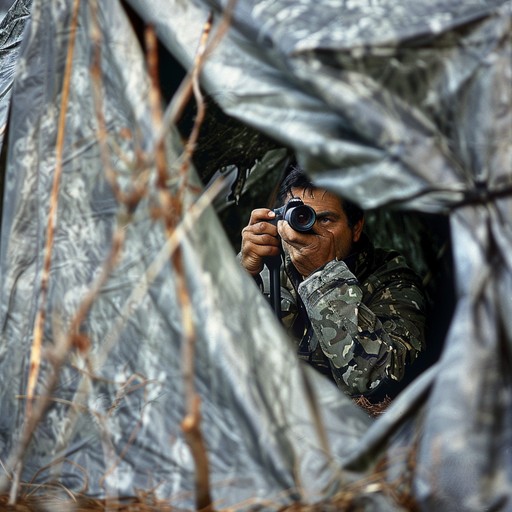
The best wildlife encounters happen when the animal has no idea you are there. A field hide — whether a purpose-built blind or a simple natural structure — removes you from the visible landscape and lets you observe behavior that would never occur with a human standing in plain sight.
It does not need to be elaborate. Some of the most productive hides are nothing more than a carefully chosen spot, a camo net, and enough patience to let the landscape settle around you. Here is how to do it right.
Why a Hide Works
Animals respond to three things that give humans away — movement, scent, and shape. A hide addresses all three simultaneously. It breaks your outline, limits your movement, and when positioned correctly relative to wind direction, keeps your scent away from your subject.
The result is access to natural behavior — feeding, social interaction, territorial displays, parenting — that disappears the moment an animal knows it is being watched. For wildlife photographers especially, a hide is not optional equipment. It is the difference between a distant record shot and an image that tells a real story.
Types of Hides
Natural Hides
The simplest and most effective hides use existing landscape features — a fallen log, a dense shrub, a rocky outcrop, a fold in the ground. Natural hides require no equipment, leave no trace, and blend perfectly because they are part of the environment.
Before investing in any equipment, spend time identifying natural features at your watching site that offer concealment, a clear line of sight, and a favorable wind position. A hollow in a streambank with a view across a water source is worth more than any manufactured blind.
Portable Pop-Up Blinds
Pop-up blinds are the most practical option for most wildlife watchers and photographers. They set up in minutes, pack down to a manageable size, and provide full concealment with pre-cut viewing windows for optics and cameras.
[Recommended: Portable Pop-Up Wildlife Blind]
Look for:
- Camo pattern matched to your environment — woodland patterns for forested sites, prairie or marsh patterns for open country
- Shoot-through mesh windows — allow you to photograph through the blind without opening a flap and creating movement
- Hub-style frame — faster and easier to set up than pole-and-sleeve designs
- Scent-control fabric — reduces odor transmission, worth having for mammal watching
Pros:
- Fast setup and breakdown
- Full concealment from all angles
- Protects you and your gear from weather
- Comfortable for extended sessions
Cons:
- Takes up pack space
- Needs to be set up in advance for best results
- Can look unnatural if not positioned carefully
Camo Nets and Burlap
A lightweight camo net draped over natural vegetation or a simple frame is more versatile than a pop-up blind and packs down to almost nothing. It is the preferred option for photographers who need to move between sites or work in terrain where a freestanding blind looks out of place.
[Recommended: Lightweight Camouflage Net]
A 5×10 foot net weighs under a pound and can be shaped around almost any natural feature. Attach it to branches, trekking poles, or a simple wire frame depending on the site.
Ground Blinds and Layout Blinds
For watching birds and low-profile mammals at ground level — geese, cranes, shorebirds, prairie dogs — a layout blind lets you lie flat and become effectively invisible in open terrain. These are primarily used by waterfowl hunters but work equally well for wildlife photography in grassland and wetland habitats.
[Recommended: Layout Ground Blind]
Vehicle Hides
Your car or truck is one of the most effective wildlife hides available. Animals in areas with vehicle traffic quickly become habituated to parked vehicles while remaining wary of humans on foot. Sitting quietly in a parked vehicle at a wildlife area, refuge, or roadside pullout with a window mount for your optics or camera gives you a stable, concealed platform that most animals ignore entirely.
[Recommended: Car Window Mount for Binoculars or Camera]
For serious vehicle-based wildlife photography, a beanbag rest or dedicated window mount stabilizes long lenses far better than handholding.
[Recommended: Beanbag Camera Rest for Vehicle Use]
Choosing the Right Location
The location of your hide matters more than the hide itself. A perfectly constructed blind in the wrong spot produces nothing. A rough natural hide in the right spot produces everything.
Find the Activity First
Before setting up anything, spend time observing the site without a hide. Where are animals moving? What time do they arrive? Which direction do they approach from? What are they doing — feeding, drinking, resting, displaying?
This observation phase is not wasted time. It is the most valuable time you will spend at any site, and it prevents you from setting up in completely the wrong position.
Work Around Wind
Position your hide so the prevailing wind blows from the area you expect animals to approach toward you — not from you toward them. At most sites this means setting up downwind of the focal point — a water source, a feeding area, a trail crossing.
Check wind direction at the specific time of day you plan to watch. Morning thermals in mountain terrain often flow downhill; afternoon thermals flow uphill as the ground warms. Wind direction at 6am may be completely different from wind direction at 2pm.
Prioritize Line of Sight
You need a clear, unobstructed view of your focal point from a comfortable sitting or lying position. Check this before committing to a site — what looks like a clear view standing up can be completely blocked by grass or low vegetation at seated height.
Consider the light direction too. For photography especially, having the sun behind you and illuminating your subject produces far better images than shooting into the light. Position your hide on the west or north side of your focal point for morning sessions, east or south for afternoon.
Set Up in Advance
Animals notice changes in their environment. A hide that appears overnight gives wildlife time to assess and accept it before you are inside it. Where possible set up your hide one to three days before you plan to use it — even a pop-up blind becomes part of the landscape quickly once animals have investigated and found it harmless.
If same-day setup is necessary, arrive well before expected activity and give the site at least 30 minutes to settle after setup before expecting results.
Setting Up a Pop-Up Blind
Step by Step
- Choose your position — downwind of the focal point, clear line of sight, good light angle
- Clear the ground — remove any sticks, dry leaves, or debris that will make noise when you shift position
- Set up the blind — most hub-style blinds open in seconds; stake it down firmly so wind does not move it
- Add natural cover — attach local vegetation — branches, grass, reeds — to the exterior of the blind using the loops or straps provided. This breaks the geometric outline of the blind and helps it blend with the surroundings. Use vegetation from the immediate area rather than cutting material from elsewhere
- Set your windows — open only the windows you need; closed windows reduce light leakage from inside the blind that can alert animals
- Check your shooting lane — sit down inside and confirm your view is clear from your actual working position, not from standing height
- Back out carefully — leave the site without walking through the area animals will be approaching from
Inside the Blind
- Wear dark clothing — animals can see inside a blind through mesh windows, particularly in low light. Dark colors reduce your visibility inside the blind significantly
- Minimize movement — slow, deliberate movements only; no sudden gestures
- Keep gear organized — know where everything is so you are not searching noisily for a lens cap or snack at a critical moment
- Silence your phone — completely, not just on vibrate
- Be patient — plan to be in position for at least two to three hours; the best activity often comes after a long quiet period
Scent Control
For mammal watching especially, scent is the variable that defeats everything else. A perfectly positioned, perfectly constructed hide that puts your scent into the approach path of a whitetail or elk is a wasted morning.
Practical scent management for hide use:
- Approach from downwind every single time — not most times, every time
- Wash clothing in scent-free detergent before sessions — standard laundry detergent leaves UV-brightening residue that is also visible to many animals
- Store clothing in a sealed bag with natural material — dry leaves, pine needles, or soil from the site helps neutralize foreign odors
- Avoid scented products on the day — no cologne, scented deodorant, or strongly scented food
- Use a wind checker regularly — wind shifts happen; check it every 20 to 30 minutes during a session
[Recommended: Scent-Free Laundry Detergent for Hunting and Wildlife Use] [Recommended: Wind Checker Powder]
Hides for Specific Situations
Water Sources
A hide overlooking a reliable water source is the most consistently productive setup in dry conditions. Almost every species in the area will visit eventually. Set up on the downwind side, position for morning or evening light, and plan for a long session — activity can be unpredictable but is almost guaranteed at some point.
Keep the hide well back from the water’s edge — 30 to 50 feet minimum. Animals approaching water are already alert and cautious; a hide too close to the source will be detected and avoided.
Woodland Edges and Clearings
Position the hide at the edge of cover looking into the open area rather than in the middle of the clearing. Animals emerging from cover will appear at the treeline — often pausing to assess before moving into the open — which gives you time to prepare and produces naturally framed images.
Bird Feeding Areas
A hide near a feeding station — whether natural berry bushes, a seeded area, or a supplemental feeder — produces fast, predictable activity and is the best setup for beginning wildlife watchers. Birds habituate to a hide very quickly, often within minutes, making it an excellent environment to practice hide technique before applying it to more challenging situations.
Nest Sites and Dens
Extreme caution is required around nest sites and active dens. The welfare of the animal always takes priority over any photograph or observation opportunity. General principles:
- Never set up a hide at a nest or den without prior knowledge that the species tolerates it — many do not
- Approach and setup should cause zero disruption to normal behavior
- If the animal shows any stress response to your presence, back off immediately and do not return until the breeding season is over
- Check local regulations — some species and nest sites are legally protected and disturbance carries significant penalties
Essential Hide Kit
Beyond the hide itself, a few items make extended sessions significantly more comfortable and productive:
Seating — a low, lightweight camp stool or foam sit pad keeps you comfortable for hours without the fidgeting that comes from sitting on hard ground.
[Recommended: Lightweight Folding Camp Stool]
Knee and elbow pads — for ground-level work in a layout blind or natural hide, basic foam pads make long sessions on hard or wet ground manageable.
Gloves and face cover — hands and faces are the most visible parts of a person inside a blind. Dark or camo gloves and a simple face mask or buff eliminate two of the most common sources of animal alarm from inside a hide.
[Recommended: Camo Face Mask and Gloves Set]
A thermos — long sessions in the field go better with a hot drink. A quality vacuum thermos keeps coffee or tea hot for six to eight hours.
[Recommended: Vacuum Insulated Thermos]
Knee-high rubber boots or waterproof footwear — hide sites near water are often wet underfoot. Wet feet end sessions early.
[Recommended: Waterproof Rubber Boots for Field Use]
Frequently Asked Questions
How long should I stay in a hide?
Plan for a minimum of two to three hours per session. Wildlife activity is unpredictable and the best moments often come after a long quiet period. The first 30 to 45 minutes after setup or arrival is typically the quietest — animals in the immediate area need time to settle and resume normal behavior. Sessions of four to six hours produce the best results at most sites.
Do I need a purpose-built blind or will natural cover work?
Natural cover works extremely well when used thoughtfully. The advantage of a purpose-built blind is consistency — it gives you the same concealment in any location regardless of available natural cover, and protects you and your gear from weather. For photographers with expensive equipment, the weather protection alone justifies carrying a blind. For casual observers, a camo net over natural vegetation is often all you need.
How close can I get to wildlife in a hide?
Closer than you can on foot — but the right distance still depends on the species, season, and individual animal. Watch for stress signals even from inside a hide. A hide reduces your visual and scent signature but does not make you invisible — some individuals will still detect and avoid a hide regardless of how well it is positioned. The right distance is always the one at which the animal shows no awareness of your presence.
Can I use a hide for wildlife photography with a long lens?
Yes — and a hide significantly improves wildlife photography by allowing much closer approach distances and natural behavior. Most pop-up blinds have shoot-through mesh windows designed for camera lenses. For telephoto work a window mount or beanbag rest inside the blind stabilizes the lens far better than handholding over an extended session.
How do I stop condensation fogging my lens inside a blind?
Temperature difference between inside and outside the blind causes condensation on cold glass. Allow your camera and lenses to acclimatize to outdoor temperature before entering the blind — bringing warm gear from a heated car directly into a cold blind is the main cause. Inside the blind, keep lens caps on until you are ready to shoot and avoid breathing directly toward the front element.
Always follow local regulations regarding wildlife disturbance and protected species before setting up hides near nest sites or dens.