
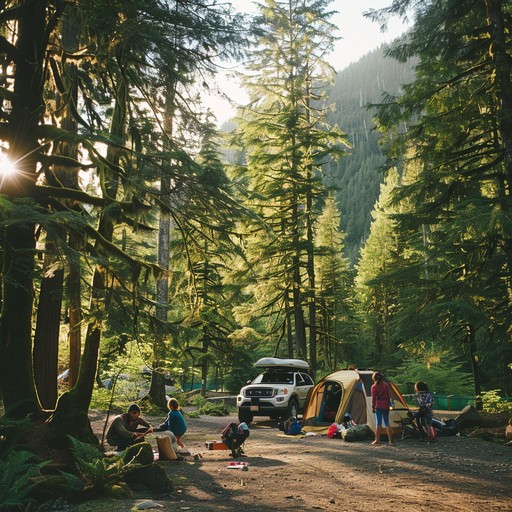
You do not need a dedicated overlanding rig or a custom camper van to use your vehicle as a base for outdoor adventures. A standard car, SUV, or truck can serve as a surprisingly capable base camp for hiking trips, fishing weekends, hunting seasons, or multi-day outdoor excursions — without major modifications or significant expense.
This is not about building the perfect overlanding setup. It is about using what you already have, more intentionally, so that your time outdoors is more comfortable and your gear is easier to manage.
Why Using Your Vehicle as a Base Camp Works
Most outdoor trips involve a lot of time near your vehicle. You drive to a trailhead, set up somewhere nearby, and use your vehicle as the central point for food, gear, rest, and shelter. Leaning into that reality — rather than fighting it with a tent and gear spread across a campsite — makes a lot of practical sense.
There are several reasons vehicle-based camping works well in practice:
- Your gear stays dry. Rain, dew, and condensation are the enemy of comfort on any trip. Everything stored in your vehicle is protected without any effort.
- You are never far from a road. Access to help, supplies, or a quick exit in an emergency is simpler than deep backcountry camping.
- You are not carrying everything on your back. This means you can bring more comfort items — a proper sleeping pad, better food, more layers — without the weight penalty of backpacking.
- Setup and breakdown are faster. You are not pitching and striking camp each day.
- Vehicles are relatively secure. A locked vehicle keeps food, electronics, and valuables safer than a tent or bear box.
This style of camping suits a wide range of activities: day hiking from a fixed point, fishing trips, hunting camp, mountain biking, or simply using a remote spot as a quiet base for several nights.
How to Organize Your Gear Inside Your Vehicle
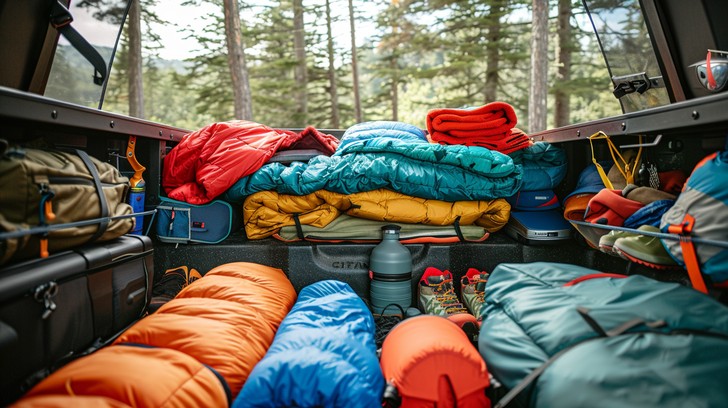
The biggest challenge with vehicle-based camping is staying organised. Without a system, everything devolves into a pile that takes ten minutes to search every time you need something. The goal is to know where everything is without unpacking the whole vehicle.
Start With Zones
Think of your vehicle in three zones: things you need frequently, things you need daily, and things you need rarely. Frequently used items — water, snacks, a headlamp, a first aid kit — should be within arm’s reach. Daily use items like cooking gear and extra layers go in the middle layer. Rarely used items like spare tyre equipment or emergency gear go at the bottom or in hard-to-reach corners.
Use Containers, Not Bags
Soft bags collapse and mix together into an unmanageable heap. Rigid containers — plastic tote bins, ammunition cans, hard-sided coolers — stack neatly, stay organised, and protect their contents. Label each one clearly.
Keep a dedicated food bin, a gear bin, a clothing bin, and a tools and recovery bin. If something does not fit cleanly into one of those categories, it probably does not need to come on the trip.
[Recommended: Mikkuppa Auto Organizer]
Cargo Management Accessories
A cargo net, cargo barrier, or bed divider prevents gear from shifting while driving and keeps the load from creeping into the cab. For trucks, a bed organiser or bed slide system makes rear access far easier without having to climb in.
[Recommended: Mikkuppa Auto Organizer]
[Recommended: Decked Truck Bed Organizer]
In SUVs and hatchbacks, a cargo shelf or drawer system creates vertical space and keeps sleeping areas clear of gear. Even a simple folding shelf from a hardware store works well for this purpose.
Keep the Cab Clear
Whatever is in the rear cargo area, the cab should stay functional. Keep it free of gear creep — one bag maximum in the cab, with everything else in its designated zone in the back. Cab clutter becomes a genuine safety issue when driving on rough tracks in low light.
Sleeping Setups
You do not need to spend thousands of dollars on a rooftop tent or a full camper conversion to sleep comfortably in or beside your vehicle. There are a few practical approaches depending on your vehicle type and how much work you want to do.
Sleeping in the Cargo Area (SUVs and Wagons)
Most mid-size and large SUVs can accommodate a sleeping platform with the rear seats folded flat. The main challenges are the uneven floor from the folded seat gap and the total length of the cargo area.
A simple plywood platform cut to fit bridges the seat gap and provides a level sleeping surface. This does not need to be a permanent build — a removable platform that slides in when needed and stores in a garage the rest of the time works perfectly well.
On top of the platform, a self-inflating sleeping pad or quality foam mat provides comfort and insulation from the cold vehicle floor.
Length is the limiting factor for taller people. Measure your cargo area before committing to this setup — some SUVs are just long enough, and some are not.
Sleeping in a Truck Bed
A truck bed is a natural sleeping platform, particularly on full-size trucks. The main requirements are a sleeping pad, a sleeping bag rated for the expected low temperature, and some form of weather protection.
A truck bed tent pitches over the bed using the bed walls as a frame. These are simple to set up, relatively inexpensive, and provide solid weather protection without permanent modifications.
[Recommended: Truck Bed Tents]
If weather is not a concern, sleeping on a pad directly in the bed under a clear sky is one of the more pleasant ways to spend a night outdoors. For security and weather protection without a tent, a hard or soft tonneau cover provides a waterproof, lockable enclosure — though ventilation needs to be managed carefully.
Sleeping Beside the Vehicle
Sometimes the simplest setup is a tent or bivy pitched right beside the vehicle, using it as a windbreak and gear storage rather than a sleeping space. This works well when the vehicle is small, when you are travelling with multiple people, or when you simply prefer sleeping on the ground. ***Be sure to account for proper food storage when camping in bear country!!! The last thing you want is a hungry bear breaking into the car looking for dinner!***
The vehicle becomes your kitchen, gear locker, and dry storage. The tent is just for sleeping. It is a clean, low-fuss approach that most people can execute with gear they already own.

Temperature and Condensation
Sleeping inside a vehicle in cold weather requires attention to ventilation. A fully sealed vehicle will accumulate significant condensation from breathing overnight — enough to soak fabric surfaces and sleeping bags. Leave a window cracked slightly or use a magnetic window vent to allow airflow without rain ingress.
In hot weather, the reverse problem applies. A vehicle heats up quickly in direct sun and stays warm long after dark. Shade, airflow, and a reflective windshield cover make a material difference to sleeping temperature.
Power and Charging Solutions
Modern outdoor trips often involve devices that need power: phones, GPS units, cameras, headlamps, and communication devices. A vehicle-based setup gives you more power options than backpacking, but managing it properly still requires some thought.
Your Vehicle’s 12V System
Every vehicle has a 12V outlet (the old cigarette lighter socket) and most modern vehicles have USB ports built in. These work for trickle charging phones and small devices while the engine is running, but they will drain your starter battery if used for extended periods with the engine off.
Running accessories from your main starter battery with the engine off is a real risk. A flat starter battery in a remote location is a genuine problem. The simplest solution for short trips is to charge devices while driving and use a separate power source at camp.
Portable Power Stations
A portable power station — a large rechargeable battery with AC outlets, USB ports, and a 12V output — is the most practical power solution for vehicle-based camping. You charge it from your vehicle while driving or at home before departure, and use it at camp without any risk to your starter battery.
[Recommended: Portable Power Station (500Wh to 1000Wh)]
For most weekend trips, a 500Wh unit is more than sufficient. For longer trips or when running more demanding devices, a 1000Wh unit gives comfortable headroom. Look for a unit with USB-C Power Delivery, at least two AC outlets, and a clear remaining capacity indicator.
Dual Battery Systems
For regular vehicle-based camping, a dual battery system — a second battery dedicated to accessories and isolated from the starter battery — is the proper long-term solution. Installation is roughly a half-day job for a mechanic and provides a reliable, permanent power source for all camping use.
This is worth considering if vehicle-based camping is something you do regularly. It is not necessary for occasional trips.
Solar
A portable solar panel propped on the dashboard or laid on the roof can supplement a portable power station or secondary battery during the day. In full sun, a quality 100W panel can meaningfully extend your power availability over a multi-day trip.
(see article on backcountry solar)
Solar is most useful on stationary multi-day trips. On trips where you are driving daily, the alternator charges your power station adequately without needing solar input.
Lighting and Visibility at Night
Good lighting at a vehicle base camp makes a bigger difference to comfort and function after dark than most people expect until they have experienced a well-lit versus a poorly-lit camp setup.
Camp Lighting Around the Vehicle
A lantern or work light that illuminates the area immediately around the vehicle handles most camp tasks — cooking, gear retrieval, and camp organisation. LED lanterns have largely replaced fuel lanterns for this purpose: they are cheaper to run, safer, last far longer on a charge, and produce no carbon monoxide.
For working in the cargo area, a rechargeable LED work light or a strip of LED tape lighting attached inside the tailgate or hatch frame provides good task lighting without having to hold anything.
Personal Lighting: Headlamps
A headlamp is the most useful personal lighting tool at camp — it keeps your hands free and puts the light exactly where you are looking. Keep one in the cab and one in the sleeping area so you are never searching for light in the dark.
(See article on headlamps)
Red Light Mode
A red light setting on a headlamp or lantern preserves night vision and is less disruptive to nearby people and wildlife. Worth using for moving around camp once you are oriented, rather than always running full white light.
Visibility for Safety
If your camp is near a road, track, or area with vehicle traffic, a flashing amber or red light on a visible surface of your vehicle adds a useful safety margin. Magnetic emergency LED lights are inexpensive and serve this purpose well.
Weather Considerations
Weather is the variable that most affects comfort at a vehicle base camp. Thinking through your setup before you arrive — rather than improvising on arrival in the dark — pays dividends every time.
Wind
Wind is the biggest comfort issue at exposed campsites. Your vehicle is a natural windbreak — position it to shelter your cooking and living area from the prevailing wind direction. Check which direction the wind is coming from before committing to a position when you arrive.
A lightweight tarp or side awning extending from the vehicle creates a sheltered outdoor living area that makes cooking, eating, and gear organisation comfortable in significant wind and light rain.
[Recommended: Samout Side Awning]
Rain
Rain changes the calculus significantly. Everything you need to do outside the vehicle needs to be accessible and efficient — faffing with gear in heavy rain leads to wet interiors and a miserable camp.
A few habits make rain management easier:
- Keep frequently accessed items in the same place every trip so you can retrieve them without unpacking in the rain
- A small mat outside the entry point of the vehicle keeps mud and water from tracking in
- A microfibre towel near the entry keeps surfaces dry
- Cook under a tarp rather than in the vehicle — carbon monoxide from stoves accumulates rapidly in enclosed spaces
Never cook inside a closed vehicle with any fuel-burning stove. This is a carbon monoxide risk and applies regardless of how cold or wet conditions are outside.
Cold Weather
Cold significantly affects both comfort and equipment performance. A few practical points worth knowing before a winter trip:
- Batteries — phone, GPS, headlamp — lose performance rapidly below -5°C. Keep them in a sleeping bag or inside clothing overnight. Use lithium batteries rather than alkaline for any critical device.
- A quality sleeping bag rated below the expected low temperature matters more than any other piece of sleep kit. Cold from below is often the bigger problem — a sleeping pad with a good R-value insulates effectively from a cold vehicle floor.
- A 12V heated blanket run from a power station can take the edge off in shoulder-season cold without requiring a full cold-weather sleep system.
Heat and Summer Conditions
Heat is an underestimated base camp challenge. A vehicle parked in direct sun becomes genuinely dangerous in warm weather — interior temperatures can exceed the ambient air temperature by 20°C or more.
Park in shade wherever possible. A reflective windshield cover and window shades dramatically reduce interior heat gain. In summer conditions, sleeping inside a vehicle is only comfortable with adequate ventilation — at minimum, windows cracked on both sides to create airflow.
Keeping Things Simple and Efficient
The appeal of vehicle-based camping is that it sits between backpacking minimalism and bringing absolutely everything. The temptation is to fill every available space because you can. The reality is that an overpacked vehicle is almost as frustrating to live out of as an overpacked backpack.
Pack for the Trip, Not for Every Possibility
If there is a 5% chance you will use something, it probably does not need to come. This applies especially to tools, spare parts, and “just in case” gear that tends to multiply across trips.
Build a Standardised Kit
Having a consistent set of bins — food bin, cooking bin, sleep kit, clothing, tools — that you replenish after each trip means packing takes minutes rather than an hour of reassembly. Once the system is built, the effort per trip drops significantly.
Keep a Trip Checklist
Not because you will forget the obvious things, but because the non-obvious things — a headlamp, matches, a first aid kit top-up — are what actually gets forgotten. A simple list on your phone takes five minutes to build and saves real problems in the field.
Do a Gear Audit After Each Trip
Anything you did not use is a candidate to leave home next time. Anything that caused friction — hard to access, wrong container, missing piece — is worth solving before the next trip while the memory is fresh.
Clean Out Between Trips
Leaving gear in a vehicle between outings creates clutter, allows food smells to accumulate, and means you never know exactly what is in there when you need something. A proper cleanout after each trip takes twenty minutes and makes every subsequent trip easier to pack for.
The goal is a vehicle that is genuinely ready to go, with everything in its place, in under an hour of packing. That is achievable with a bit of system-building — and it makes the outdoor time itself far more relaxed.
Frequently Asked Questions
What size vehicle do I need for base camp camping?
Almost any vehicle works, though more space is obviously more comfortable. A full-size SUV or truck provides the most flexibility. Compact SUVs and crossovers work well with a little creativity. Even a standard sedan can serve as a base camp if you pitch a tent alongside it for sleeping and use the vehicle for gear storage and shelter. The key is working with what you have rather than waiting for the ideal vehicle.
Do I need to modify my vehicle?
No. A cargo net, some tote bins, and a sleeping pad are enough for a functional setup. Modifications like roof racks, drawer systems, and dual battery setups are worth considering if you camp frequently, but they are not prerequisites for getting started.
How do I deal with food storage and wildlife?
Store food in hard-sided containers inside a locked vehicle. Do not leave food, scented items (toothpaste, soap, sunscreen), or rubbish visible through windows — this attracts wildlife in areas with bears and other animals. A cooler inside the locked vehicle is sufficient for most areas. In bear country with specific regulations, check local requirements before your trip. Many campsites offer bear proof storage for food and any other items that may attract unwanted visitors.
Is it safe to sleep inside a vehicle?
Yes, with appropriate ventilation. The main risks are carbon monoxide (never use fuel-burning stoves or heaters in a closed vehicle), overheating in summer (always ensure adequate airflow), and cold (use an appropriate sleeping bag and insulation). Crack a window or use a ventilation screen even in cold weather to prevent dangerous condensation build-up and ensure fresh air circulation.
Can I run a heater inside my vehicle?
Dedicated 12V vehicle heaters designed for in-car use — such as diesel-powered parking heaters — are safe when installed and operated correctly, as they draw combustion air from and exhaust to the outside. Propane heaters designed for indoor use, camping stoves, or any combustion device not specifically designed for enclosed vehicle use should never be run inside a closed vehicle under any circumstances.

Bear Safety Considerations.
I want to emphasize the importance of bear safety when using your vehicle as a base camp. I’ve had a few close encounters myself, and I know people who have had their vehicles broken into by bears. Taking a little extra caution can make a big difference.
Don’t let the risk discourage you from getting out there—but do have a plan. Proper food storage and minimizing scents around your vehicle are critical in bear country. With the right approach, using your vehicle as a base camp can still be safe and effective.
I’ll be putting together a separate guide focused specifically on camping in bear country, which will go into more detail.
(See article on camping in bear country)
Prices vary based on retailer. As an Amazon Associate we earn from qualifying purchases .