
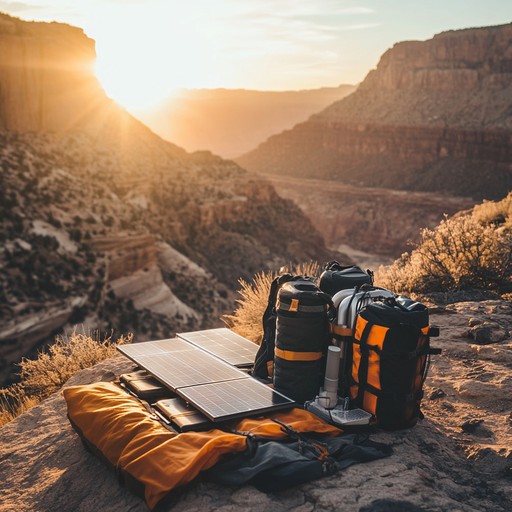
A reliable solar charger can be the difference between a dead GPS on day three and a safe, connected trip. But not every solar panel is built for the trail. Weight, durability, charging speed, and how well a panel performs in real cloud cover all vary significantly between models.
This guide covers seven of the best solar chargers for backpacking across different budgets and trip types, with honest assessments of each. It also explains what the specs mean in practice and how to choose the right one for how you actually travel.
Quick Answer: Best Solar Chargers by Category
- Best overall: Goal Zero Nomad 20 — proven reliability, good output, folds flat (~$150)
- Best budget pick: BigBlue 28W Solar Charger — affordable, lightweight, USB-A direct charging (~$75)
- Best high output: BioLite SolarPanel 10+ — built-in battery, sunlight indicator, sturdy kickstand (~$150)
- Best for long trips: Goal Zero Nomad 50 — 50W output, pairs with power stations (~$250)
Our Top Picks
1. Goal Zero Nomad 20 — Best Overall
Price: ~$150 | Output: 20W | Weight: 454g | Ports: USB-A, 8mm DC
Goal Zero has been making solar gear for backcountry use for over a decade, and the Nomad 20 reflects that experience. It folds down to a compact panel that clips to the outside of a pack, charges at a practical real-world rate, and holds up to the kind of use that would destroy cheaper panels. A strong choice for three to seven day trips where you need to keep a phone, GPS, and headlamp battery topped up.
Pros:
- Proven track record across many seasons of field use
- Durable, weather-resistant construction with reinforced corners
- Charges Goal Zero power banks directly via 8mm DC port at full speed
- Folds to a slim profile that clips neatly to a pack exterior
- Compatible with the wider Goal Zero ecosystem
Cons:
- Heavier than ultralight alternatives at 454g
- No USB-C port — requires an adapter for modern devices
- Charging speed drops noticeably under partial cloud cover
- More expensive than budget panels with similar wattage
2. BigBlue 28W Solar Charger — Best Budget Pick
Price: ~$75 | Output: 28W | Weight: 390g | Ports: 3x USB-A
The BigBlue 28W offers more wattage than many panels at twice the price, making it one of the best value options for backpackers who want direct USB charging without carrying a separate power bank. Three USB-A ports allow simultaneous charging of multiple devices. Build quality is adequate for regular use though not as robust as premium options.
Pros:
- High wattage for the price — 28W is competitive well above this price point
- Dual USB-C and one USB-A ports for charging multiple devices at once
- Folds into a compact, lightweight package
- Amorphous solar cells maintain better output in low light than standard monocrystalline
Cons:
- Build quality is noticeably below premium panels — less durable long-term
- Rated wattage assumes ideal conditions rarely found on the trail
- No integrated storage or kickstand
3. BioLite SolarPanel 10+ — Best for Versatility
Price: ~$150 | Output: 10W | Weight: 312g | Ports: USB-A, integrated 3,200mAh battery
The SolarPanel 10+ takes a different approach from straight pass-through chargers. Its built-in 3,200mAh battery stores energy when you are moving — so charging continues even when cloud cover interrupts direct sunlight. The sunlight optimisation indicator tells you exactly where to angle the panel for maximum output. The kickstand holds a stable angle on any surface.
Pros:
- Built-in battery means you capture energy even when moving or in patchy sun
- Sunlight indicator removes guesswork when positioning the panel
- Solid kickstand works well at camp
- More consistent charging experience than pass-through-only panels
Cons:
- 10W output is lower than many competitors at the same price
- Built-in battery adds weight compared to panel-only options
- USB-A only — no USB-C
- Integrated battery cannot be replaced when it eventually degrades
4. Goal Zero Nomad 50 — Best for Long or Group Trips
Price: ~$250 | Output: 50W | Weight: 1,100g | Ports: USB-A, USB-C, 8mm DC
The Nomad 50 is not an ultralight option, but for extended backcountry trips, base camp setups, or groups sharing a power source, the higher output is worth the weight penalty. It pairs directly with Goal Zero’s Sherpa and Yeti power stations for high-speed charging and includes both USB-A and USB-C ports for direct device use.
Pros:
- 50W output can fully recharge a power station in a day of good sun
- USB-C port included alongside USB-A and DC output
- Heavy-duty build designed for repeated backcountry use
- Useful for groups sharing a single charging source
Cons:
- Heavy at 1,100g — not suitable for ultralight or weight-conscious packing
- Expensive; better value as part of a Goal Zero power station setup
- Bulky folded profile compared to lower-wattage panels
What to Look for When Choosing a Backpacking Solar Charger
Solar charger specs can be misleading. Here is what actually matters for trail use.
Wattage and Real-World Output
Rated wattage is measured under ideal laboratory conditions — direct midday sun at perfect angle with no heat loss. Real-world output on the trail is typically 50 to 70 percent of the rated figure. Some things to keep in mind:
- A 20W panel in good conditions typically delivers 10 to 14W in practice
- Cloud cover, haze, shade, and panel angle all reduce output significantly
- Higher wattage gives you more margin — a 20W panel handles variable conditions better than a 10W panel
- For charging a phone once per day, 10 to 20W is sufficient; for multiple devices or a power station, aim for 20W or more
Weight
Weight matters on a multi-day trip. Most quality backpacking solar panels fall between 200g and 700g. The trade-off is real: heavier panels tend to offer higher output and better durability. Consider your trip length and how much charging you actually need before optimising for weight.
- Under 300g — ultralight, lower output or efficiency, suits minimalist trips
- 300g to 500g — the practical sweet spot for most backpackers
- 500g+ — higher output, better for extended trips or group use
Ports and Compatibility
Check what devices you need to charge before buying:
- USB-A — standard for older phones, headlamps, GPS units
- USB-C PD (Power Delivery) — required for fast charging modern phones, some GPS devices, and small laptops
- DC output — needed for Goal Zero and some other power station ecosystems
- Multiple ports are useful but check whether the total output is split between them or maintained per port
Panel Type and Efficiency
Most backpacking panels use one of two technologies:
- Monocrystalline — more efficient per surface area, better in direct sunlight, more common in quality panels
- Amorphous (thin film) — less efficient overall but performs better in diffuse light and cloudy conditions
- For most UK and northern European use, amorphous panels can have a practical advantage; in consistently sunny climates, monocrystalline wins
Durability and Construction
Trail conditions are hard on gear. Look for:
- Reinforced corners and stress points on folding panels
- Laminated rather than fabric-bonded panels for long-term durability
- Water resistance — not necessarily full waterproofing, but splash resistance at minimum
- Attachment points or loops for clipping to a pack exterior while hiking
With or Without an Integrated Battery
Some panels include a built-in battery (like the BioLite SolarPanel 10+); others are pass-through only. Pass-through panels are lighter and simpler, but charging pauses whenever the sun dips. A panel with an integrated battery or a separate power bank smooths out the gaps. For multi-day trips, pairing a panel with a dedicated power bank gives the most flexibility.
Solar Chargers by Use Case
Weekend and Short Trips (1 to 3 days)
For short trips where you mainly need to keep a phone and GPS topped up, a lightweight 10W to 20W panel is more than enough. Weight savings matter more here than maximum output.
- Best choice: BigBlue 28W
Extended Backcountry Trips (4 to 10 days)
Longer trips mean more devices, more recharging cycles, and more variable weather. A higher-output panel (20W or above) paired with a 10,000 to 20,000mAh power bank gives you reliable charging even across multiple overcast days.
- Best choice: Goal Zero Nomad 20
- High output option: Goal Zero Nomad 50
Base Camp and Group Use
When multiple people share a single panel or you need to keep larger devices such as a satellite communicator, camera battery, or small laptop charged, output becomes the priority over weight.
- Best choice: Goal Zero Nomad 50
Budget-Conscious Backpackers
You do not need to spend $150 to get a functional solar charger. Cheaper panels have genuine trade-offs in durability and efficiency, but for occasional use on fair-weather trips, they work.
Frequently Asked Questions
Can I charge my phone directly from a solar panel without a power bank?
Yes, but it is not ideal. Direct solar charging works only while the sun is shining, and any cloud cover interrupts the charge. Modern phones also charge more efficiently at a consistent voltage, which a power bank provides better than a panel in variable light. For most backpackers, using a panel to charge a power bank — and the power bank to charge devices — gives a more reliable experience.
How long does it take to charge a phone with a solar panel?
In good direct sunlight, a quality 20W panel can fully charge a typical smartphone (3,500 to 4,500mAh battery) in two to three hours. In patchy cloud or indirect light, expect that to double or more. As a practical guide: one full day of hiking with a 20W panel clipped to your pack in reasonable sun will typically deliver one to two full phone charges, depending on conditions and angle.
What wattage do I need for backpacking?
For charging phones and small GPS devices on a typical weekend or week-long trip, 10W to 20W is sufficient. If you carry a satellite communicator, camera, rechargeable headlamp, and phone, step up to 20W or above. For charging power stations or keeping a group supplied, 50W is more appropriate. More wattage also gives you more resilience against cloudy days.
Do solar panels work on cloudy days?
Yes, but output drops significantly. On a heavily overcast day, most panels produce 10 to 25 percent of their rated output. Amorphous panels handle diffuse light better than monocrystalline, but neither performs well in deep cloud. Pairing your panel with a power bank means you store energy during sunny periods and draw from it when conditions are poor.
Should I clip the panel to my pack while hiking?
This is a common technique and it works, but with caveats. You will rarely achieve the optimal panel angle while moving. Swaying and shade from trees or your body further reduce output. Realistically, clipping a panel to a pack while hiking will produce around 30 to 50 percent of what stationary charging in direct sun achieves. It is still worth doing for topping up a power bank throughout the day, but do not rely on it as your only charging window.
Are expensive solar panels significantly better?
Yes, in two ways: efficiency and durability. A $150 panel typically converts more sunlight to usable power per square centimetre than a $40 panel, and is built to survive more seasons of packing, unpacking, and exposure to the elements. That said, the gap narrows on shorter trips in good conditions. A budget panel will function for several years with careful use; a premium panel is an investment for those who spend significant time in the backcountry every year.
What is the difference between a solar charger and a solar power station?
A solar charger (or solar panel) is just the panel itself — it converts sunlight to electricity and passes it on to a device or battery. A solar power station combines a large battery with charging circuitry, often in a single unit. For backpacking, a solar panel paired with a compact power bank is the most weight-efficient approach. Power stations are better suited to car camping or base camps where weight is not a concern.
Prices listed are approximate retail at time of writing and may vary by retailer and region. Wattage figures are manufacturer-rated under ideal conditions; real-world output will be lower. Recommendations are based on practical trail performance and build quality. As an Amazon Associate, we earn from qualifying purchases.