Best Binoculars for Wildlife Viewing
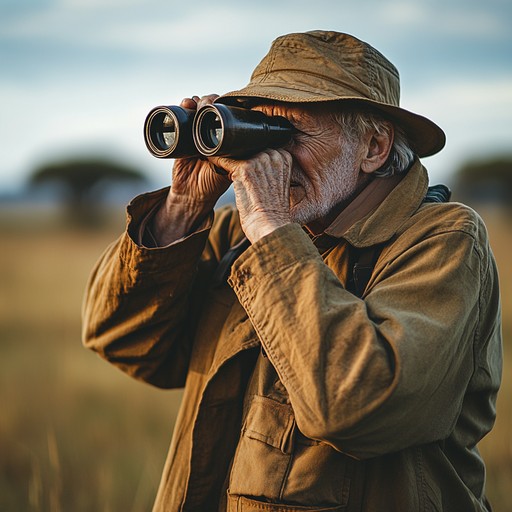
Good binoculars make a real difference in the field. The difference between identifying a bird in distant branches and just seeing a blur often comes down to the quality of your optics. But with prices ranging from under $100 to over $2,500, it can be hard to know where to start.
This guide covers seven solid options across different budgets and use cases, with honest pros and cons for each. It also explains what the specs actually mean in real outdoor conditions.
Quick Pics: Best Binoculars by Category
- Best overall: Vortex Viper HD 10×42 — excellent optical clarity, durable, mid-range price (~$450)
- Best budget pick: Celestron Nature DX 8×42 — reliable, waterproof, under $100
- Best for hiking: Nikon Monarch M5 8×42 — lightweight, weather-sealed, good field of view
- Best for long-distance viewing: Swarovski EL 10×42 — the professional benchmark (~$2,700)
- Best for beginners: Vortex Diamondback HD 8×42 — easy to use, tough, lifetime warranty (~$200)
- Best compact option: Kowa BD 8×32 — lightweight and portable without sacrificing quality (~$380)
- Best mid-range upgrade: Zeiss Terra ED 10×42 — German optics quality at a more accessible price (~$650)
Our Top Picks
1. Vortex Viper HD 10×42 — Best Overall
Price: ~$450 | Magnification: 10x | Objective lens: 42mm | Weight: 630g
The Viper HD consistently outperforms its price bracket. HD glass and XR anti-reflection coatings deliver noticeably better colour fidelity than most sub-$500 binoculars. It handles everything from woodland birding to open-country scanning and comes with Vortex’s unconditional lifetime warranty.
Pros:
- Excellent low-light performance for dawn and dusk viewing
- Fully waterproof and nitrogen fog-proofed
- Generous eye relief at 17mm — comfortable for glasses wearers
- Lifetime unconditional warranty with no questions asked
Cons:
- Heavier than 8x models at 630g
- 10x magnification amplifies hand shake when unsupported
- Focus wheel can feel slightly stiff straight out of the box
2. Celestron Nature DX 8×42 — Best Budget Pick
Price: ~$80 | Magnification: 8x | Objective lens: 42mm | Weight: 680g
For first-timers or occasional users who need a reliable waterproof pair without a large outlay, the Nature DX delivers a genuinely bright image at a hard-to-beat price. It includes phase-coated prisms, which is unusual at this price point.
Pros:
- Waterproof and nitrogen-purged to prevent internal fogging
- Wide field of view (120m at 1000m) — good for tracking moving birds
- Phase-coated prisms improve contrast for the price
- Very affordable entry point for beginners
Cons:
- Noticeable chromatic aberration (colour fringing) at image edges
- Focus wheel is less precise than mid-range models
- Not as bright as premium glass in low light
- Plastic housing lacks the feel of more expensive pairs
3. Nikon Monarch M5 8×42 — Best for Hiking
Price: ~$300 | Magnification: 8x | Objective lens: 42mm | Weight: 580g
The Monarch M5 offers one of the best weight-to-performance ratios in the full-size 8×42 category. Extra-low dispersion glass handles colour accuracy well, and the rubberised armour holds up to trail use without unnecessary bulk. It is one of the lightest quality 8x42s available.
Pros:
- Among the lightest 8×42 models available at 580g
- ED glass reduces colour fringing at high-contrast edges
- Comfortable, grippy rubber armour performs well in wet conditions
- Wide field of view (119m at 1000m) for easy bird tracking
Cons:
- Eye relief of 15.4mm is not ideal for glasses wearers
- Minimum focus distance of 2.5m limits close-up use
- Low-light performance is good but not outstanding
4. Swarovski EL 10×42 — Best for Long-Distance Viewing
Price: ~$2,700 | Magnification: 10x | Objective lens: 42mm | Weight: 875g
The EL is the benchmark that competing manufacturers test themselves against. Edge-to-edge sharpness and low-light performance are exceptional. If you spend long hours scanning open landscapes — coasts, savannas, moorland — and want the clearest possible image, the EL justifies its premium. For casual use, it is overkill.
Pros:
- Extraordinary edge-to-edge image sharpness
- Best-in-class low-light performance
- Ergonomic design — comfortable to hold for extended sessions
- Swarovski’s lifetime repair warranty
Cons:
- Very expensive — difficult to justify for occasional use
- Heavier than some competitors in the premium segment
- The optical improvement over mid-range glass is real but subtle to casual users
5. Vortex Diamondback HD 8×42 — Best for Beginners
Price: ~$200 | Magnification: 8x | Objective lens: 42mm | Weight: 640g
The Diamondback HD is the most commonly recommended first pair for good reason. It has the widest field of view in this list at 131m per 1000m, making it easy to locate and track birds. The Vortex VIP warranty covers accidental damage with no charge — a genuine safety net for anyone new to using optics outdoors.
Pros:
- Widest field of view here at 131m per 1000m — easy to aim and track
- Close focus of 1.5m useful for butterflies and insects
- Vortex VIP lifetime warranty covers accidents, no fee required
- 8x is forgiving to hand-hold steadily
Cons:
- Image sharpness is slightly behind the Viper HD at a similar but higher price
- Twist-up eyecups can loosen with heavy use over time
6. Kowa BD 8×32 — Best Compact Option
Price: ~$380 | Magnification: 8x | Objective lens: 32mm | Weight: 460g
For those who prioritise portability — day hikers, travellers, or anyone who tends to leave heavy gear behind — the Kowa BD 8×32 delivers full-size optical quality in a noticeably smaller and lighter package. The trade-off is reduced light gathering in poor conditions.
Pros:
- Very lightweight at 460g — easy to carry all day
- Excellent build quality for its size
- Smooth, precise focus wheel
- Good colour fidelity in daylight conditions
Cons:
- 32mm objective lens gathers less light than 42mm — weaker at dawn and dusk
- Less adjustment range on the eyecups
- More expensive than full-size 42mm models at a similar quality level
7. Zeiss Terra ED 10×42 — Best Mid-Range Upgrade
Price: ~$650 | Magnification: 10x | Objective lens: 42mm | Weight: 740g
When you have outgrown the $200 to $300 tier and want a meaningful step up without paying Swarovski prices, the Terra ED is the natural choice. Zeiss’s T* coating delivers neutral, accurate colour rendering. The fibreglass-reinforced housing is tough and handles wet conditions reliably.
Pros:
- Zeiss T* lens coating produces accurate, neutral colour rendering
- Rugged fibreglass-reinforced chassis holds up to hard outdoor use
- Reliable waterproof performance in rain
- A genuine and noticeable upgrade over budget glass
Cons:
- Narrower field of view (100m at 1000m) compared to the Viper HD at a similar price
- Some units have a stiff focus wheel out of the box
- Heavier than the Nikon M5 at the same magnification
What to Look for When Choosing Binoculars
The spec sheet on any binocular can be confusing. Here is what actually matters for wildlife use.
Magnification (the first number)
8x is the standard recommendation for most wildlife watching. 10x brings distant subjects closer but amplifies hand shake and reduces field of view. As a general rule:
- 8x — better for woodland, moving birds, and general all-round use
- 10x — better for open country, long-distance scanning, and stationary subjects
- Anything above 10x becomes very difficult to hold steady without a tripod
Objective Lens Diameter (the second number)
This controls how much light enters the binocular. Larger means brighter in low light, but also heavier.
- 32mm — compact and light, fine for daytime use, weaker at dawn and dusk
- 42mm — the best all-round choice for most users
- 50mm — brighter in low light but heavy; rarely necessary for wildlife
Lens Coatings
Coatings on the glass surfaces reduce reflections and improve brightness and contrast. Look for:
- Fully multi-coated — coatings on all air-to-glass surfaces; this is the standard to aim for
- Phase-coated prisms — important on roof-prism designs; corrects a colour fringing issue that reduces image sharpness
- Budget binoculars often use single-coated or partially coated lenses, which produce noticeably dimmer images
Field of View
Measured in metres at 1,000m distance. A wider field of view makes locating and tracking birds much easier. 120m or wider at 1,000m is considered good. Higher magnification generally reduces field of view.
Eye Relief
Eye relief is the distance from the eyepiece at which you can see the full image. This matters most for glasses wearers:
- 15mm minimum if you wear glasses
- 18mm or more is more comfortable for extended use with glasses
- Look for twist-up eyecups that lock at your preferred position
Waterproofing and Fog-Proofing
For regular outdoor use, both are essential. Temperature changes cause internal fogging even without rain — walking from a warm car into cold morning air is enough. Look for:
- O-ring sealing — keeps rain and dust out
- Nitrogen or argon purging — prevents internal fogging; listed as “fog-proof” in specs
- These features are standard on almost everything above $100
Weight and Build
A pair you carry beats a pair that stays in the car. For quality 8×42 models, 580g to 680g is typical. Rubber armour improves grip in wet or cold conditions and protects the body from knocks.
Minimum Focus Distance
Often overlooked. Binoculars that can focus at 1.5m to 2.5m are genuinely useful for butterflies, dragonflies, and close-range identification. Many budget models cannot focus inside 3 to 4 metres, which is limiting in woodland.
Binoculars by Use Case
Hiking and Backpacking
Weight is the main concern on the trail. Look for a pair under 600g with reliable waterproofing and a comfortable neck strap. 8x magnification works well across the varied terrain of woodland and mountains.
- Best choice: Nikon Monarch M5 8×42
- Ultralight alternative: Kowa BD 8×32
- Budget option: Celestron Nature DX 8×42
Long-Distance and Open Country Viewing
Scanning estuaries, moorland, or open grassland benefits from 10x magnification. Image quality matters more here because you are spending long periods studying distant subjects. A tripod adapter is worth considering for extended sessions.
- Best choice: Swarovski EL 10×42
- More affordable option: Zeiss Terra ED 10×42
- Mid-range: Vortex Viper HD 10×42
Beginners and Casual Wildlife Watching
Start with 8x. It is easier to aim quickly at a moving bird, holds steadier in hand, and has a wider field of view than 10x. A wide FOV and a solid warranty matter more at this stage than marginal optical improvements.
- Best choice: Vortex Diamondback HD 8×42
- Budget entry: Celestron Nature DX 8×42
Frequently Asked Questions
Is 8x or 10x better for birdwatching?
For most birdwatching — particularly woodland, garden, or hedgerow birding — 8x is the better all-round choice. The wider field of view makes it easier to find birds in branches, and the image stays steadier when you are on the move. 10x earns its keep in open country where birds sit still at long range. If you are only buying one pair, 8×42 is the safer starting point.
What does ED glass mean?
ED stands for Extra-low Dispersion. Different wavelengths of light bend at slightly different angles when passing through glass, causing coloured fringing — known as chromatic aberration — around high-contrast edges like a bird against a bright sky. ED glass minimises this effect, producing cleaner, sharper colour. It is a meaningful upgrade, especially in challenging lighting conditions.
Do I need waterproof binoculars?
Yes, if you use them outdoors regularly. Internal fogging is just as common a problem as rain — moving from a warm car into cold morning air can fog the optics from the inside. Nitrogen or argon purging prevents this. O-ring sealing handles rain and splashes. These features are standard on most pairs above $100, so there is little reason to skip them.
What is the difference between porro prism and roof prism binoculars?
Porro prism binoculars have the traditional offset-barrel shape, with the objective lenses set wider than the eyepieces. Roof prism designs are straight-barrelled and more compact. Roof prisms dominate modern wildlife binoculars because they are slimmer and easier to waterproof. However, they require phase coatings to match porro prism contrast — an added cost that pushes budget roof-prism models below their porro equivalents optically.
Can I use binoculars with glasses?
Yes, but check the eye relief figure before buying. With glasses, you need at least 15mm of eye relief to see the full field of view. Most modern binoculars have twist-up or fold-down eyecups designed for glasses wearers — fold them down and your glasses bring your eye to the correct position. Eye relief of 17 to 18mm is more comfortable for extended use.
Are expensive binoculars worth it?
The jump from $80 to $200 to $300 is significant and worth it for anyone who uses binoculars more than occasionally. From $300 to $650, you gain real improvements in colour accuracy, edge sharpness, and low-light performance — worthwhile for regular birdwatchers. Above $1,000, the improvements are real but incremental, and only justified if optics are central to how you spend time outdoors. A casual user is better served by a $300 pair and spending the rest on a guided wildlife trip.
Should I use a tripod?
For extended sessions at 10x or higher, a tripod adapter reduces fatigue and improves image stability noticeably. Most full-size binoculars have a threaded port under the central hinge for a standard tripod adapter, which costs around $15 to $30. For 8x handheld use in the field, a tripod is not necessary. It is most useful for seawatching, sitting in a hide, or any scenario where you scan the same area for a long period.
Prices listed are approximate retail at time of writing and may vary by retailer and region. Recommendations are based on optical performance and real-world usability.
Leave a Reply